
AI form check · a coach that remembers
YOUR EYES
IN THE GYM
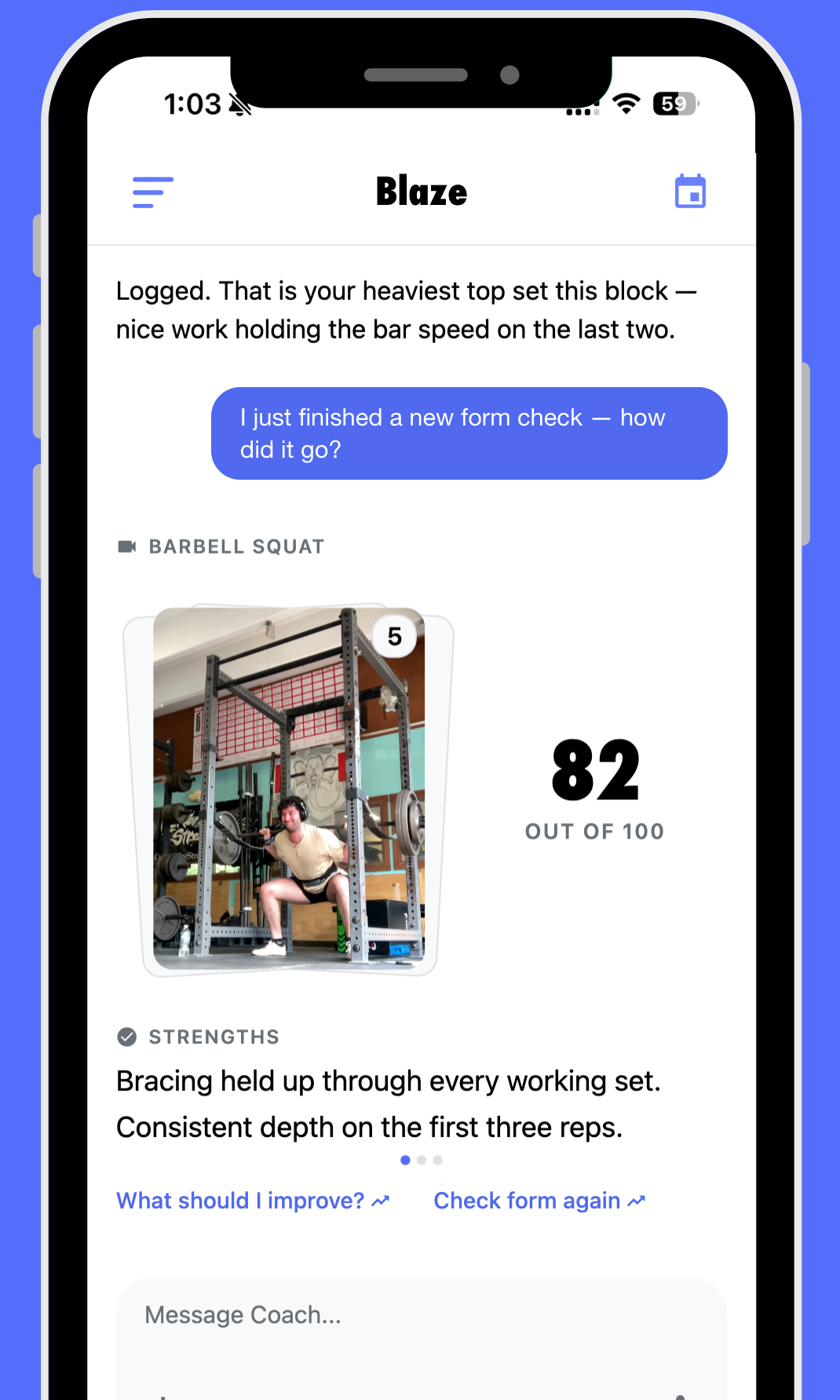
Film a set of squats, bench or deadlifts on your phone and send it to your coach. The breakdown comes back in the same conversation — how deep you got, what changed between the first rep and the last — and the number stays logged, so next week starts from what you actually lifted.




Free on iOS. Pick the coach you'll still listen to in week six.
UPLOAD
RECORD YOUR LIFT. SIDE VIEW WORKS BEST.
ANALYZE
AI EXAMINES EVERY ANGLE. EVERY MOVEMENT.
IMPROVE
GET FEEDBACK. FIX YOUR FORM. LIFT BETTER.
WHAT IT ACTUALLY DOES
THE FORM CHECK
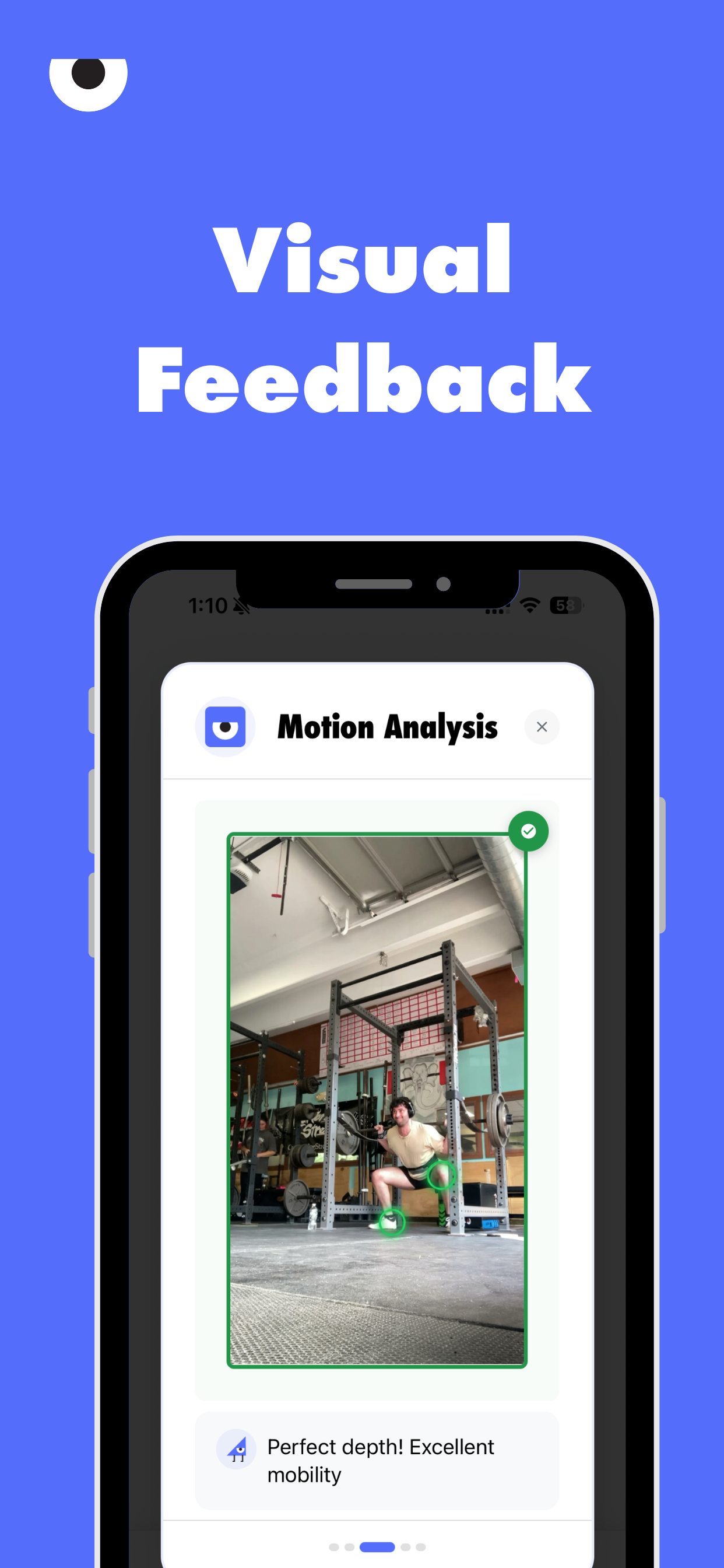
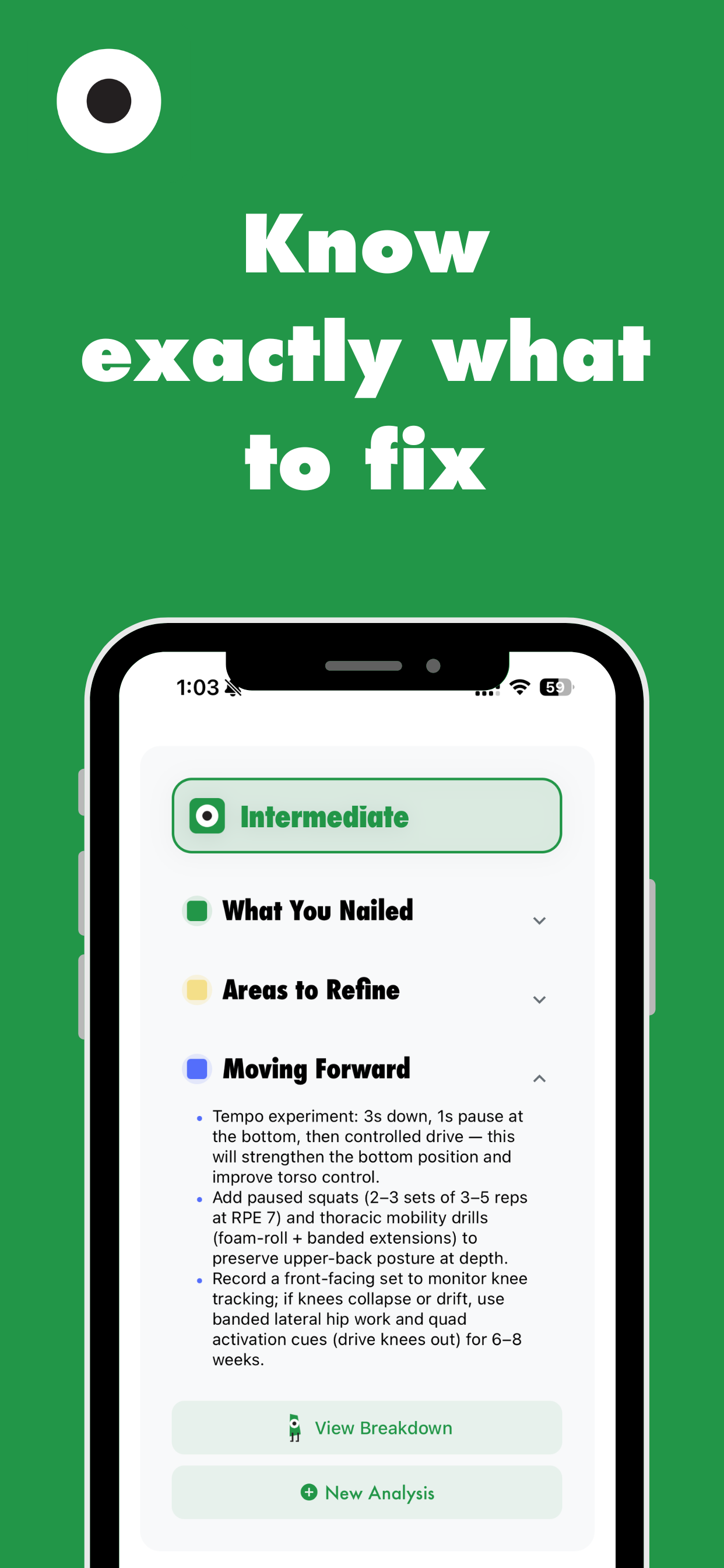
Prop your phone against a water bottle, film a set from the side, and send it into the conversation with your coach. The breakdown comes back in the same thread: a score, the frames it read, and what to fix graded from critical to minor — how deep you got, how your tempo drifted, which rep stopped looking like the ones before it. It is not a live overlay shouting at you mid-rep — nobody can act on feedback while they are under a loaded bar, and a single camera angle is a judgment, not a measurement. Flexion says that on the screen where it matters instead of in the small print.
ONE THREAD, NOT FOUR TABS
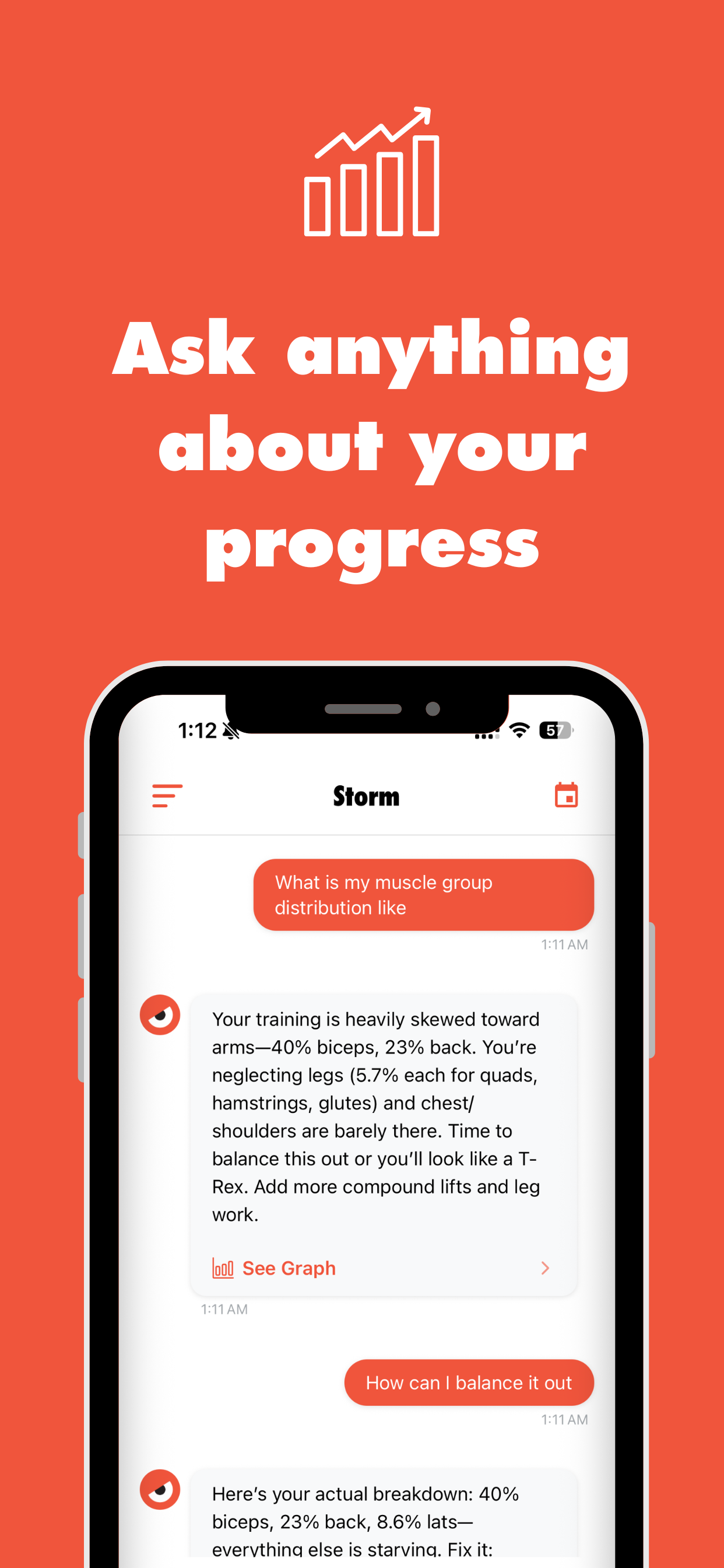
Flexion opens on the conversation. Ask what to train today, log a set from inside the workout, send a lift for a form check, or ask for the chart — volume, muscle balance, personal records, recovery — and it comes back in the thread. Quick questions get quick answers; the harder ones about you get a deeper model, and you can pin one yourself if you would rather choose.
A COACH THAT REMEMBERS TUESDAY
Most training apps ask about your goals during onboarding and then forget what you did last week. Flexion surfaces last time's numbers before you start the set — weight and reps go in from inside the workout itself, so the number you hit today is waiting the next time that lift comes up — and the coach carries that history into every conversation. Ask why your squat felt heavy and it already knows what you lifted, how long it has been, and (if you connect Apple Health or an Oura ring) how you have been sleeping. Most people are not undisciplined. They just walked in without the number they were supposed to beat.
PROGRAMS BUILT FOR THE ROOM YOU TRAIN IN
Tell it what you actually have — a full rack, or two dumbbells and a bench in a garage — and the program is generated around that equipment rather than adapted from a template that assumes a commercial gym. Lifting and conditioning live in the same log, so a week of both reads as one training history instead of two apps that have never met.
FIVE COACHES, NOT ONE VOICE
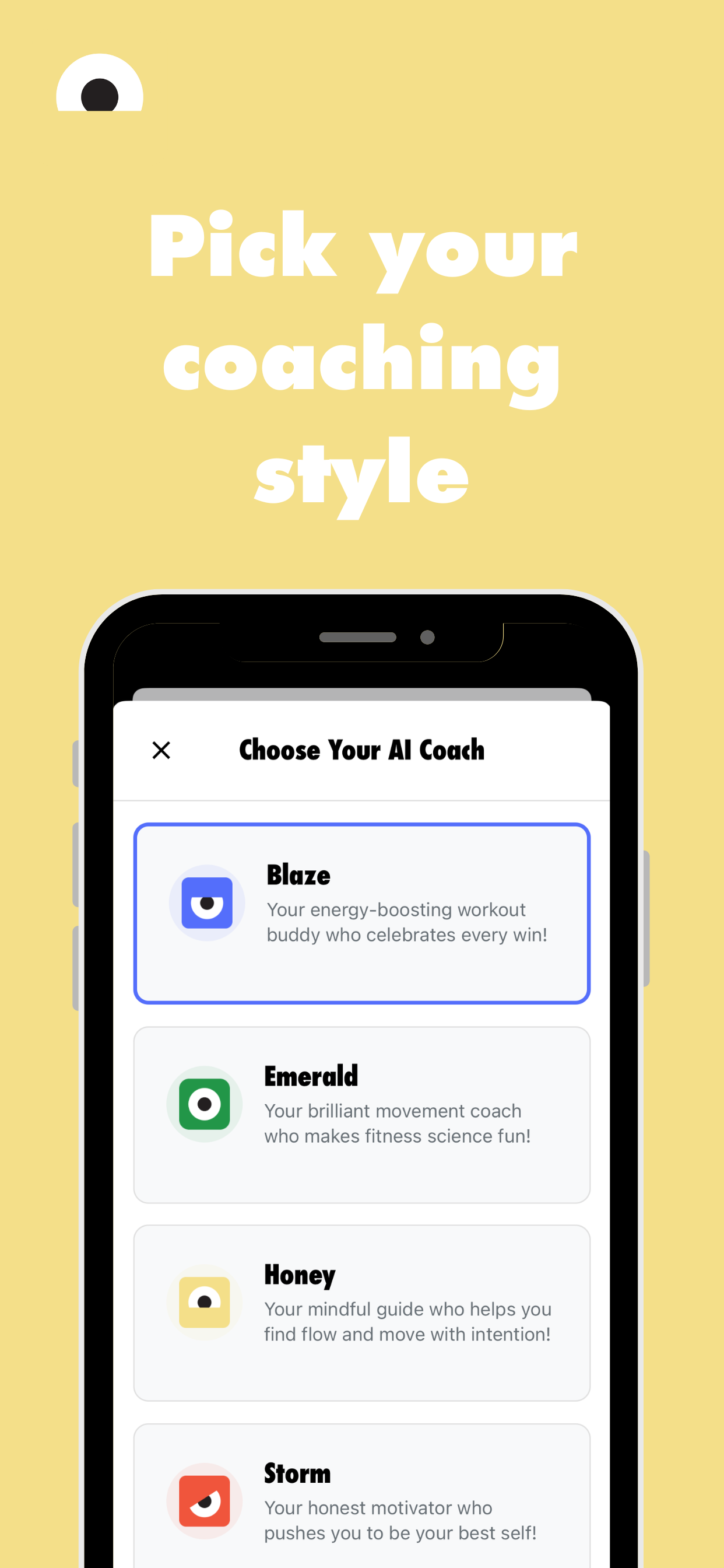
Coaching style is a real variable and people quit over it. Flexion ships five: hype, tough love, the scientific one that explains the why, the calm one, and the one that leads with how you are doing. You pick the voice you will still be listening to in week six.
CHAT WITH YOUR COACHES

LOG IT IN THE CHAT
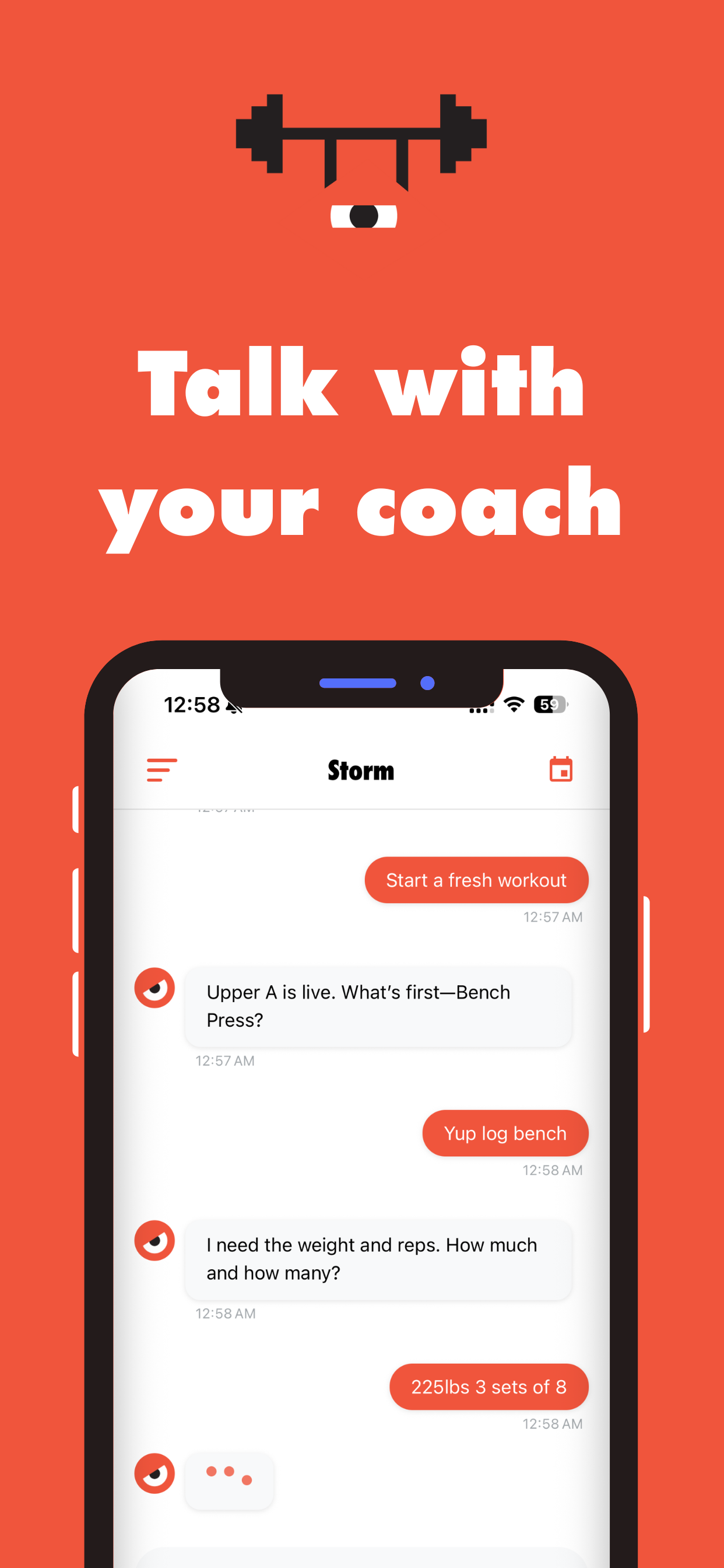
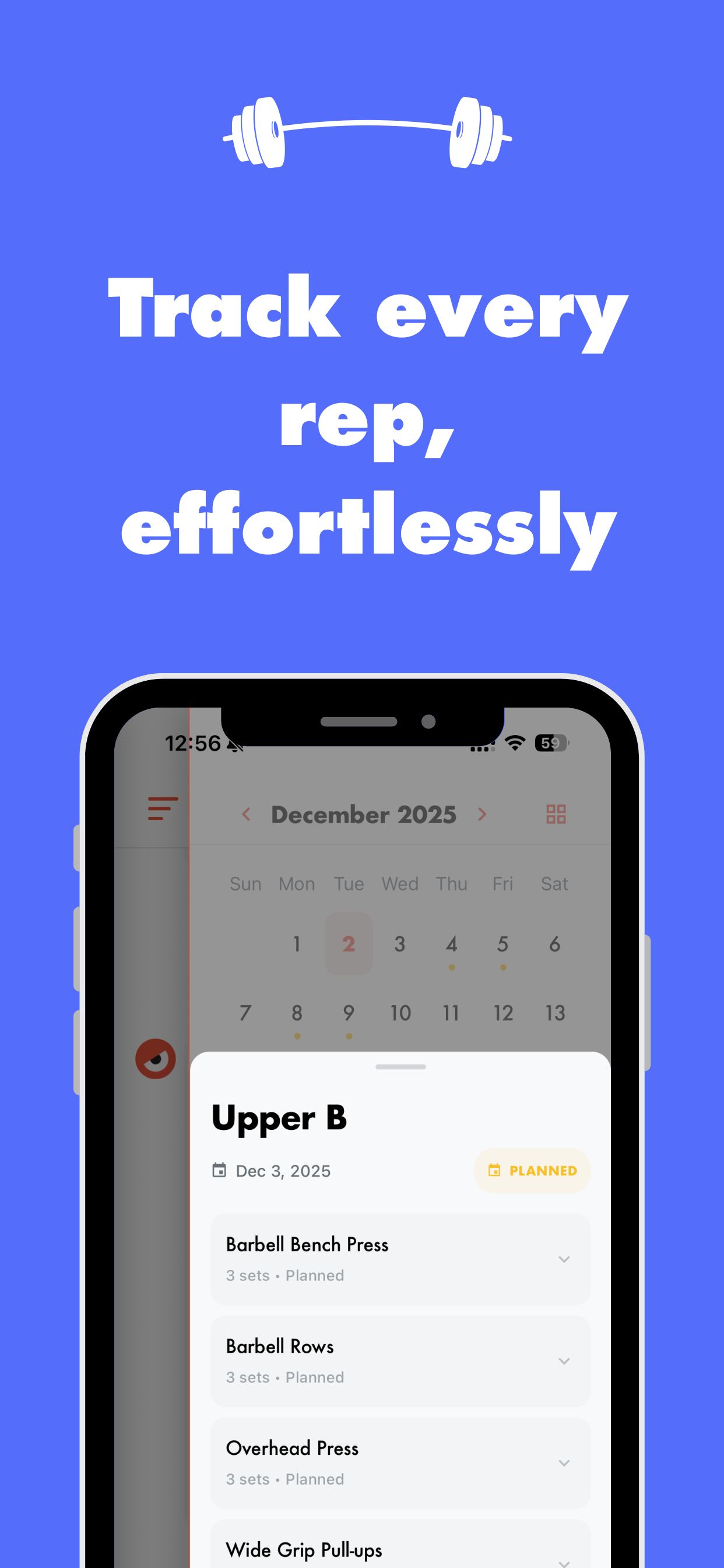
Tell your coach what you lifted and it goes into your log and onto your calendar. Nothing to fill in between sets.

ASK FOR THE CHART
Ask how your bench is going and the answer comes back as a chart in the thread: every session, your estimated one-rep max, the volume.

SEE IT DONE FIRST
Not sure what a Romanian deadlift should look like? Ask, and your coach brings back a few demo videos to watch before you film your own.

ASK THE REAL QUESTION
Why did Tuesday's squat feel heavy? Ask it the way you would ask a coach standing next to you. The answer starts from your own training history, not a generic one.
SEE IT IN ACTION
QUESTIONS PEOPLE ACTUALLY ASK
- Can an app actually check my lifting form?
- Part of it, and it is worth being exact about which part. From one camera angle a phone can see how deep you went, how your tempo changed across a set, and which rep stopped looking like the ones before it. It cannot see what your spine is doing in three dimensions, and it cannot tell you whether something hurts. Flexion reports what a video can support and says plainly where the reading ends — one angle is a judgment, not a measurement.
- Do I have to film every set?
- No, and most people shouldn't. Film the working sets of the lift you are actually trying to change — usually two or three sets a session. Everything else gets logged the way you already log it. The form check is a tool you point at a question, not a tax on every rep.
- How is this different from posting a form check online?
- Speed and memory. A stranger on the internet sees one rep of one day and answers from scratch, which is why two of them give you opposite advice. Flexion answers in about a minute and has every set you have logged, so it can tell you that your depth held for six reps and went on the seventh — a thing nobody watching a single clip can know.
- Does it replace a coach?
- No. If you have a good coach, keep them — a coach standing next to you sees things a camera does not, and adjusts in the moment. Flexion is for the other six days, when nobody is watching and the only record of the session is whatever you remember about it.
- What do I need to use it?
- An iPhone running iOS 15.1 or later, and somewhere to prop it up. Connecting Apple Health or an Oura ring is optional and adds sleep and readiness to what the coach knows about you. Flexion is free to download on the App Store.
- Where does my video go?
- To Flexion's servers, and from there to the AI providers that do the analysis — Anthropic and OpenAI. The app tells you this on the first screen you see, before anything is sent, and you can decline. The privacy policy lists exactly what is sent and why: your messages, the lift videos and meal photos you choose to share, your logged training, and any Apple Health data you connect.
Small Gains · on YouTube
THE COACHES HAVE A SHOW
Short animated stories about real gym struggles: the heavy day after a double shift, knees that won't stay out, the first time through the door. Every one ends with one of the four coaches helping.
WATCH ON YOUTUBE
ep 1 · some days are heavier
FROM THE BLOG
We write about lifting form, training, and what a camera can and cannot tell you — no listicles, no filler.
The Bulk You Feel in Week Three Is Water
Three weeks into lifting, your jeans feel tight and the scale is up, and 'lifting makes you bulky' starts to look like it was right. It wasn't. Here's what that early size actually is, how slowly real muscle arrives, and the one number that tells you which is which.
Your Warm-Up Is the First Reading of the Day
Most warm-ups are a ritual: some cardio, some stretches, a few sets with the empty bar. But the sets on the way up to your working weight are the only point in a session where you can still change the plan, and only if you know what you're climbing toward.
A Plateau Is Three Sessions, Not One Bad Day
Most lifters deload on a feeling: one flat session, one heavy week, one grinder. But a stall isn't something you can see from inside a single workout. It's a pattern across three, and you can only see it if you wrote the three down.
Improvement Is Invisible at the Rate It Happens
You filmed the set, picked a cue, ran it for six weeks — and you still can't tell if it worked. That's not a discipline problem. You built a before and then let it evaporate.

FOLLOW THE BUILD
FLEXION IS BEING BUILT IN PUBLIC. ONE SHORT EMAIL WHEN SOMETHING REAL SHIPS. NO SPAM, EVER.